
Senior Housing
By Golda Hukic-Markosian, PhD. | Photograhphy by Dung Hoang
CAROL HOLLOWELL
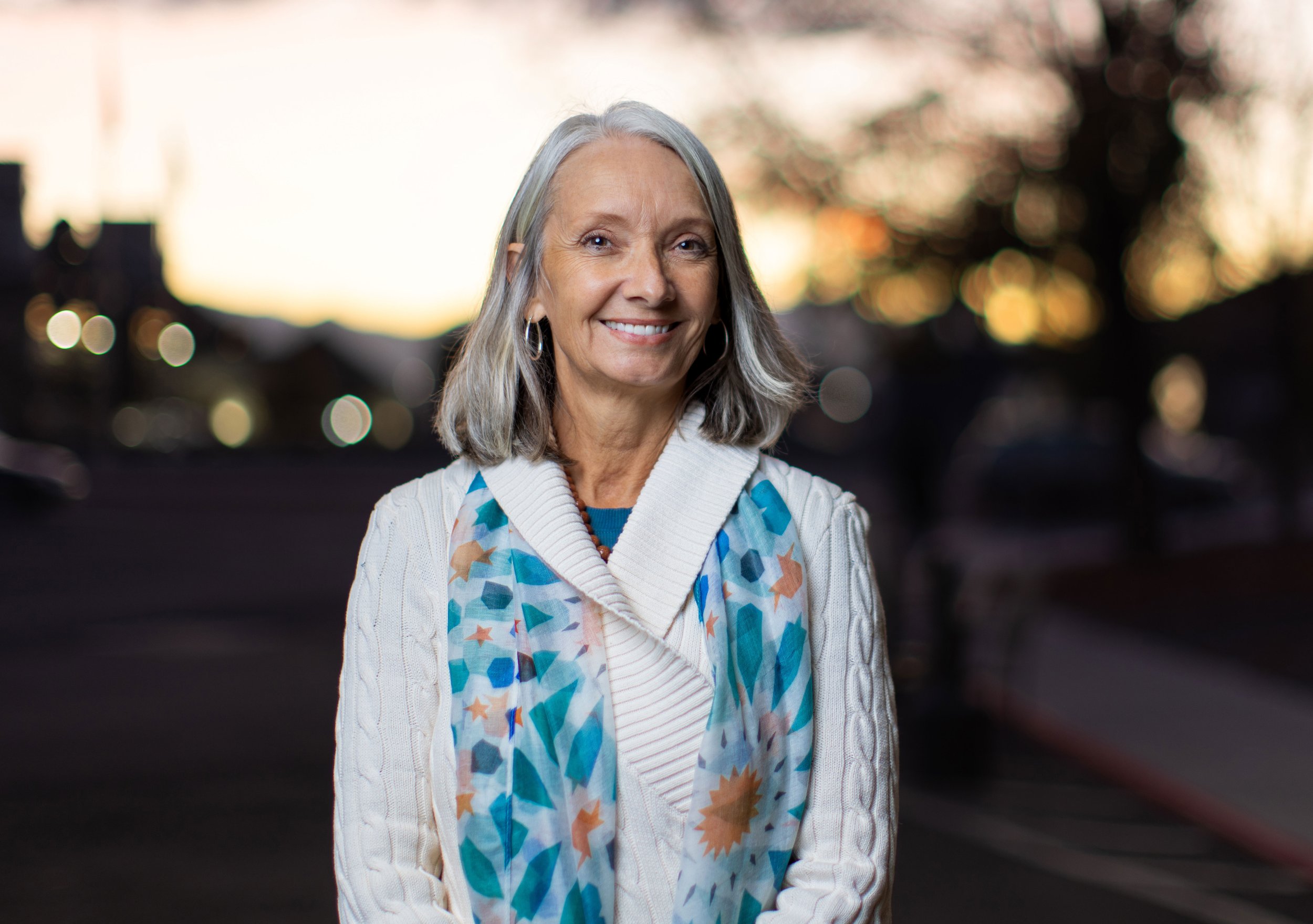
“I WANT 1,000 UNITS, DAMN IT.”
Carol Hollowell laughs when she says it, but she’s not joking. In fact, she rarely is when the conversation turns to Utah’s homeless crisis. Behind that blunt declaration sits a lifetime of watching the system fail the very people it claims to help — seniors sleeping on cots, veterans priced out of rentals, and individuals trapped by policies that leave them no safer inside housing than they were on the streets.
Carol is the founder and CEO of Switchpoint, an organization now operating shelters, micro-communities, and deeply affordable housing across Utah. For more than a decade, she has been one of the few leaders willing to say out loud what many inside the system avoid. “There’s a lot of procedural and systemic issues we have not been able to get through,” she says. “It’s almost impossible to stay in as a provider.”
Her work has become a blueprint for what actually moves people out of crisis.
Creating Housing With Purpose, Not Permission Slips
From day one, Carol believed housing could work, but only if it functioned as a community rather than a warehouse. She built her model around three principles: connection, community, and kindness.
“If you create housing that focuses on those three things, it builds up the ability for residents to police themselves,” she explains. “They don’t want bad behavior. They want a place where they belong.”
Switchpoint properties hold regular resident meetings, create shared rules, and expect tenants to help enforce them. It’s accountability grounded in dignity, not punishment.
This stands in sharp contrast to federally mandated permanent supportive housing requirements which prevent providers from enforcing basic safety measures. “You can’t require case management, you can’t bring in a drug dog, and you can’t kick people out,” Carol says. “We have to get away from that model of anything goes.”
Work Is the Engine of Stability
One of Carol’s most radical beliefs is deceptively simple: everybody works. Not because she demands productivity, but because work creates purpose — something crucial for individuals rebuilding their lives.
She shares a story about a woman who came to Switchpoint directly after rehab. She couldn’t find a job due to her record, couldn’t keep paying for sober living, and eventually landed in a micro-shelter. Case managers tried everything but employers kept turning her away. So Switchpoint hired her.
After four months of steady work at the coffee shop, she earned an open unit at one of Switchpoint’s North Temple properties.
“That’s the circle of success,” Carol says. “We’re not doing this for you. We’re guiding you as you make the decisions — because it has to be your choice if it’s going to stick.”
The Silent Emergency: Seniors with Income but Unable to Afford Rent
While public attention often focuses on visible homelessness, Carol sees another crisis rising quietly behind it: senior homelessness.
Utah’s seniors — many in their 70s, 80s, even 90s — are being priced out of rentals after a lifetime of work. Many have income. Many can pay modest rent. But they cannot find anything under $1,000 a month.
Switchpoint now houses more than 200 seniors in studio apartments created from old hotels — and still has a waitlist in the hundreds.
When Carol interviewed all 200 people staying at her overflow shelter, she discovered something startling:
87 percent had income
Every single one said they would pay $500 a month for housing
Not one said they wanted to stay on a cot
“To think that everyone wants to be homeless is so incorrect,” she says. “They all want housing. But we don’t have anywhere to put them.”
A System Designed to Stall Providers
Even when funding exists, Carol says the system creates roadblocks built into its bones.
“When it takes four or five months to get reimbursed, that is a systemic problem,” she says. “We just want to help people, but it becomes so onerous that providers can’t do it anymore.”
Federal “strings” tied to funding often increase project costs by 30 percent. Requirements such as Build America, Buy America, and prevailing wage mandates cause delays that push crucial projects months or years behind.
The most glaring example was the abandoned Ramada Inn redevelopment on North Temple — 420 units that could have housed seniors and individuals with income ready to pay affordable rent. Millions were allocated; almost nothing materialized.
“If people had known,” Carol says, “we could have moved 200 seniors into housing years ago.”
Facing NIMBYism With Results, Not Arguments
Carol’s projects rarely arrive without neighborhood pushback.
“I’ve been NIMBYed so many times I should get a tattoo,” she jokes.
But the outcome speaks for itself. At one North Temple site — once a run-down hotel surrounded by encampments — the presence of Switchpoint residents has transformed the block. “We’ve improved our area,” she says. “You see fewer homeless hanging around because it’s a real community now.”
Residents sweep sidewalks, pick up trash, and look after each other. Carol sees opportunities everywhere: old office buildings, schools, motels, warehouses. “How do we get zoning changed so we can do that?” she asks. “We could fix this.”
Building Villages, Not Just Units
Switchpoint now operates:
A 200-bed year-round shelter on Redwood Road
Micro-shelters under the spaghetti bowl
Two senior housing properties on North Temple
Women’s mental-health housing in Millcreek
Men's mental-health housing opening in Murray
Projects in Tooele, Davis, and Washington counties
At the Fair Park property — originally 94 units — Switchpoint will soon add 76 more, followed by an additional 80 out front. Nearly 250 units for seniors and veterans will rise from what was once a rundown hotel.
“These guys are happy,” Carol says. “This is where they’ll stay. This is home.”
Never
People keep asking her when she’s going to retire.
Her answer is immediate: “Never.”
And then she circles back to her opening line — the one that defines her mission today.
“I want 1,000 units this year in Salt Lake County. That’s how many we’re short.”
Carol’s goals are simple:
Dignity for people who haven’t felt it in years
Seniors not sleeping on cots
Veterans in places they can afford
Communities built on accountability, not chaos.
FACES of Utah profiles the leaders and change makers shaping our state.
Recognized for your impact?
[ Request Media Information ]