
Fine Furniture
By Tamara S. Wolfe | Photography by Dung Hoang
FORSEY’S FINE FURNITURE
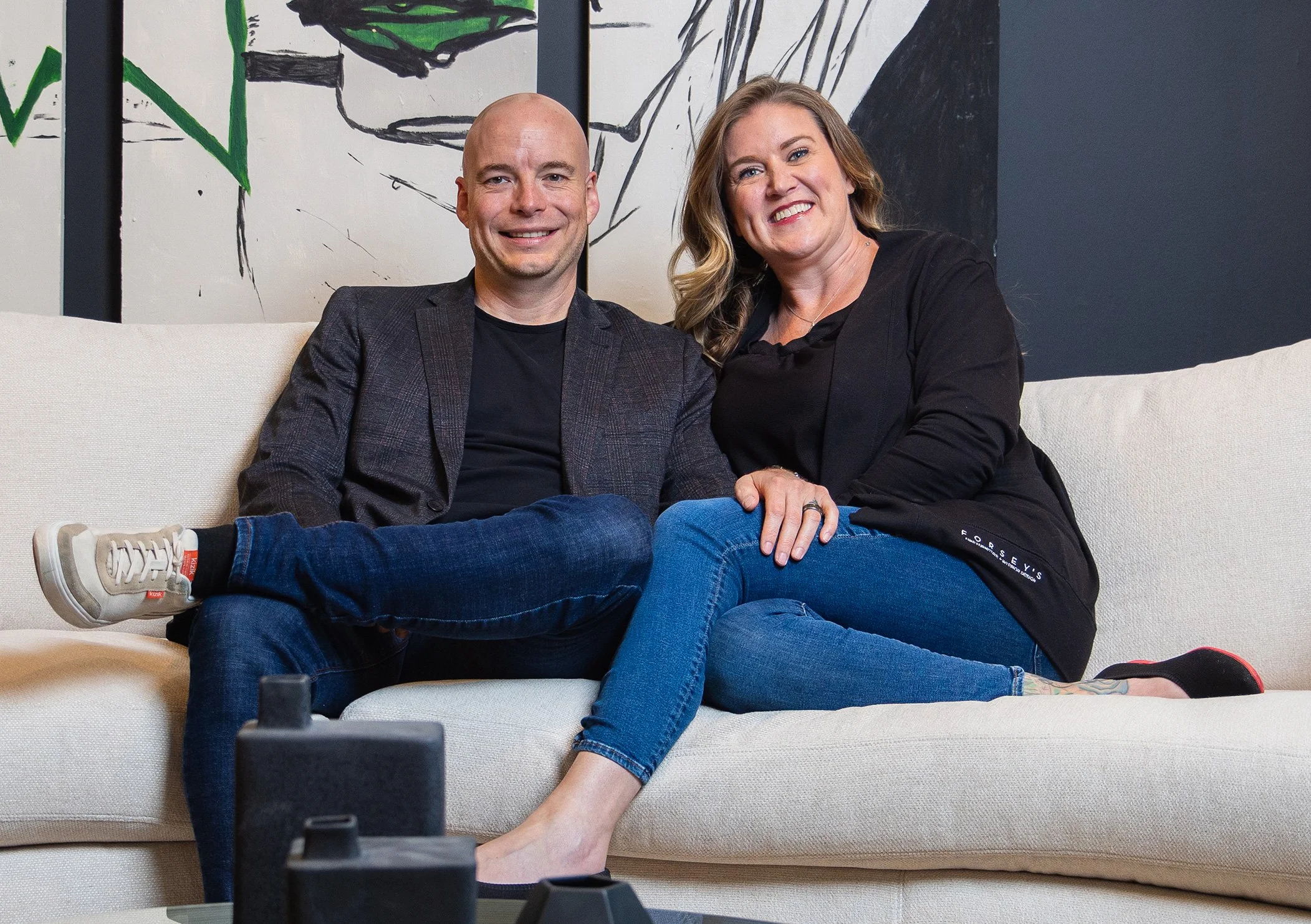
“MY DAD FOUGHT TOOTH AND NAIL TO KEEP THIS PLACE GOING, using his retirement funds to make payroll and not paying himself.”
When Jack Forsey returned to Forsey’s in 2010, he thought he was only coming back for a few months. He had just finished college, and his dad needed help steadying a business hit hard by the financial crisis. The furniture industry suffered a punishing downturn.
Forsey’s Salt Lake store was wounded.
Old inventory sat too long. Cash flow was strained. Morale sunk low enough to feel the moment you walked through the door.
The bargain basement was a nightmare.
“It was filled with garbage,” Jack recalls. “I spent days hauling away the disorder and making the space usable again.”
Then came months of cleaning, organizing, relighting, retagging, and building a new website.
“My dad told me that if I was willing to work this hard, we would be OK.”
For Jack, that kind of grit grew from a battle with a hose.
Every day after school, he walked to Forsey’s, often hiding in what he laughingly describes as a Harry Potter-style storage closet beneath the stairs. It was filled with ledgers and carbon-copy tickets that carried a sharp chemical smell he still remembers. He would tuck in and read, hoping to avoid being given a task.
But someone always found him. It was usually his dad, assigning him the job he dreaded most.
He had to spray off the front of the store and wash leaves and dirt out of the cracks, then roll up the hose, which fought him every time. His dad would make him do it again. And again. Until the loops lined up.
Jack despised every minute, but he learned the values Forsey’s was built on: hard work, never giving up, and doing the job right.
Yet it wasn’t until adulthood that Jack truly understood the soul of Forsey’s.
“My dad and I would eat lunch together,” Jack says. “I knew what dad was facing to keep the store afloat. The weight of it. I saw the way he treated customers, employees, and vendors. They were family. It felt so wholesome. That’s when I fell in love with the business.”
Over the next year and a half, Forsey’s started to come back.
“It was really rewarding,” Jack recalls. “We had escaped certain death. Many furniture stores had closed. We made it by the skin of our chin.”
But it required change.
“When I was growing up, Forsey’s was a high-end luxury experience,” Jack says. “I still have customers who won’t come in without a tie or dress on. But we don’t have a code anymore. People can come in with sweats and a tank top and just be themselves.”
Commission pay went away too.
“We want our customers to enjoy the quality, craftsmanship and comfort of our store without pressure,” Jack says. “To feel what it means to be part of our family.”
You can see it in customers like Jan, a woman in her eighties, who cares for her husband with Alzheimer’s. She stops by when she can.
“She calls Forsey’s her free ‘therapy session,’” Jack says with a smile.
The staff gathers, cracks jokes, makes her laugh, and gives hugs. Sometimes her favorite salesperson helps her pick out an item. Sometimes they simply talk.
“Jan means more than a hundred high-ticket sales,” Jack says. “She’s proof that Forsey’s is still a place where life can feel lighter.”
Jack was never going to let that change, even as another storm arrived.
“My wife Michelle and I had just bought the business after my dad retired in 2019,” Jack says. “Michelle was working seven days a week in technology consulting while raising our two kids. Yet she set aside time to help me when dad stepped away.”
Then Covid hit.
While Forsey’s stayed open, most of the sales team stayed home. Customers still came in, but there were not enough hands.
“I told her I needed her full-time,” Jack says.
She didn’t hesitate.
Jack handled merchandising and working with vendors, while Michelle brought skills in software, finance, and IT, along with a plan to help Forsey’s survive.
“She’s the brains,” Jack says. “I punched way above my weight class when I married her.”
Together, they moved design appointments to FaceTime, shifted floor plans into digital form, and replaced handwritten tickets with online payments.
Forsey’s became stronger, leaner, more accessible. Its design and shipping services expanded across the country.
But it never lost its human touch. Jack’s great-grandpa had something to do with that.
He left his mark in a letter to Jack’s grandpa and great-uncle, the duo who opened Forsey’s in 1951. Banged out on an old typewriter, it hangs in Jack’s office.
“It speaks about being honest and forthright, and serving to the best of your ability,” Jack says. “I cherish every word. It guides me in everything I do.”
Even rolling hoses.
“It’s now my favorite job,” Jack says with a laugh.