
Little Cottonwood Canyon
More than a Road to the Slopes
By Richard Markosian | Photography by Howie Garber Images©
EVERY WINTER, NEARLY EVERY SATURDAY MORNING, FROM AGE FIVE TILL GRADUATION, I was able to experience Little Cottonwood Canyon’s best powder. My Grandpa bought season passes for my brothers and me to Snowbird. We were incredibly fortunate to grow up on the Greatest Snow on Earth, experiencing waist-deep powder days. Tiger Tale, Great Scott, and STH (Steeper than Hell), were our choices on the best days after we were gifted with a powdery playground. My Grandma (also a mountain enthusiast) wrote a poem called, You, Gravity and White, that was published on shirts and posters. I became a “Snowbird kid” and converted my friends into fans of the amazing terrain.
This past season, I again had a season pass to Snowbird. The culture of skiing has changed dramatically. Nearly everyone now wears helmets. Why? Because that’s what we do now. Fat skis have replaced the narrow skis. Why? Again, just because that’s the norm. I still prefer narrow skis. Powder days that once lasted entire weekends now disappear in hours due to high-speed quads.
Elite skiers can now chase powder arriving from around the world, many using the Ikon Pass with premium lift access. None of that particularly bothers me. Such is the culture of skiing today. Skiing evolves, and if I want Fast Tracks, I can purchase the skip-the-line pass too.
What concerns me now is something much larger than lift lines.
For years, Utah has debated the proposal to build a gondola up Little Cottonwood Canyon. Despite opposition UDOT now supports the proposal. Supporters view it as a long-term transportation solution that could reduce congestion and improve access during avalanche closures.
Opponents question its cost, practicality, and perhaps most importantly, its impact on one of Utah’s most extraordinary natural landscapes. Snowbird chose not to participate in our Little Cottonwood Canyon feature because the magazine has expressed skepticism about the gondola proposal. I respect that decision, but I also hope those who support the project will consider another perspective.
Little Cottonwood Canyon is not just a road leading to two ski resorts. It is one of Utah’s greatest natural treasures.
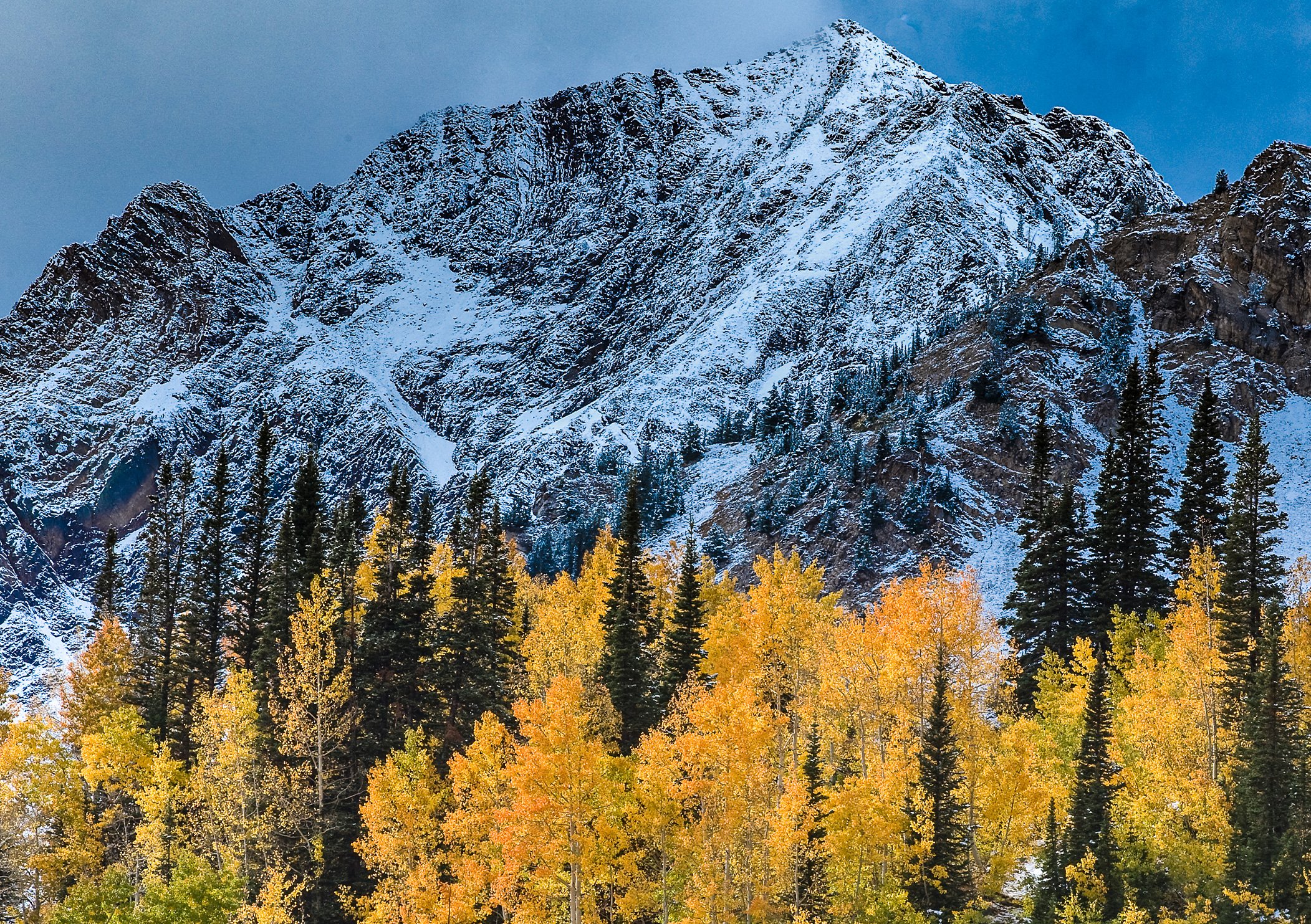
The canyon’s towering granite walls were carved by glaciers over thousands of years, creating one of the most spectacular alpine landscapes in North America. In Springtime, waterfalls tumble from sheer cliffs. Avalanche chutes slice through dense evergreen and aspen forests. In Albion Basin, wildflowers blanket the canyon floor each summer, while climbers, hikers, skiers, snowboarders, backcountry enthusiasts, ice climbers, and photographers all return year after year. Few places so close to a major metropolitan area possess such awesome beauty and geological significance.
That concern isn’t limited to environmental organizations like Save our Canyons. When Alta Mayor Roger Bourke joined us on the Utah Stories Podcast, he described how the gondola would effectively arrive in the backyard of Alta residents, transforming what has long been a quiet alpine mountain town into a transportation hub for thousands of daily visitors. Bourke has also publicly warned that Alta’s unique character could be permanently altered by infrastructure that prioritizes moving people through the canyon over preserving the community and landscape that make it so special.
When I think about the proposed gondola, I cannot help but ask a broader question. Should some places remain less developed, to retain the ecosystem and natural beauty even if doing so means accepting inconvenience?
Supporters point to traffic, avalanche closures, and increasing visitation. Those are legitimate challenges requiring thoughtful solutions. But I worry that the gondola’s 35 towers requiring thousands of yards of concrete in pristine ecosystems is a permanent answer to a problem where there are less invasive alternatives such as a fleet of electric buses. Once large-scale infrastructure is built into a canyon like Little Cottonwood, there is no returning it to the landscape we inherited.
I often ask people to think about the proposal differently. Would we build a gondola to Delicate Arch simply because it would make visiting easier? Would we string cables across Bryce Canyon to improve views of the hoodoos? Would we construct a gondola to Angels Landing because demand exceeds trail capacity?
Most Utahns would instinctively answer no. Those places are extraordinary precisely because we have restrained development and preserved the natural beauty.
To me, Little Cottonwood Canyon belongs in that same category. It may not be a national park, but its beauty is every bit as awe-inspiring. It deserves the same stewardship we extend to Utah’s other iconic landscapes.
This is not an argument against Snowbird, Alta, or tourism. Those resorts have introduced generations of Utahns — including me — to the mountains and have contributed enormously to our outdoor culture and economy. It is simply an argument that the solution to congestion should not permanently alter one of the most remarkable alpine canyons in North America without first exhausting every less-invasive alternative.
Multiple lawsuits challenging UDOT’s approval of the gondola remain pending. The plaintiffs include conservation organizations as well as Salt Lake City, Sandy City, and the Metropolitan Water District, with claims that UDOT didn’t adequately analyze the watershed impact. Improved bus service, reservation systems, expanded park-and-ride facilities, or future transportation innovations may ultimately prove to be better answers. My concern is that once a project of this scale is built, its footprint becomes part of the canyon for generations.
Perhaps I am biased because this canyon helped shape my childhood. Every turn reminds me of mornings spent with my grandfather and brother chasing powder through Gad Valley, the Cirq and Peruvian Gulch. Those memories are inseparable from the landscape itself.
Little Cottonwood Canyon has given generations of Utahns memories that cannot be replaced. We should be careful not to permanently change one of Utah’s greatest natural treasures for a transportation solution that future generations may one day regret.
I recognize that thoughtful people support the gondola for reasons they believe are in Utah’s best interest. If you have information, perspectives, or research that challenge my conclusions, I genuinely welcome the conversation. The best decisions for Utah are made when we are willing to listen, question our assumptions, and let the evidence guide us.