
WILLIAMS METCALF INTERIORS
Interior Design
By Taylor Hartman | Photography by John Taylor
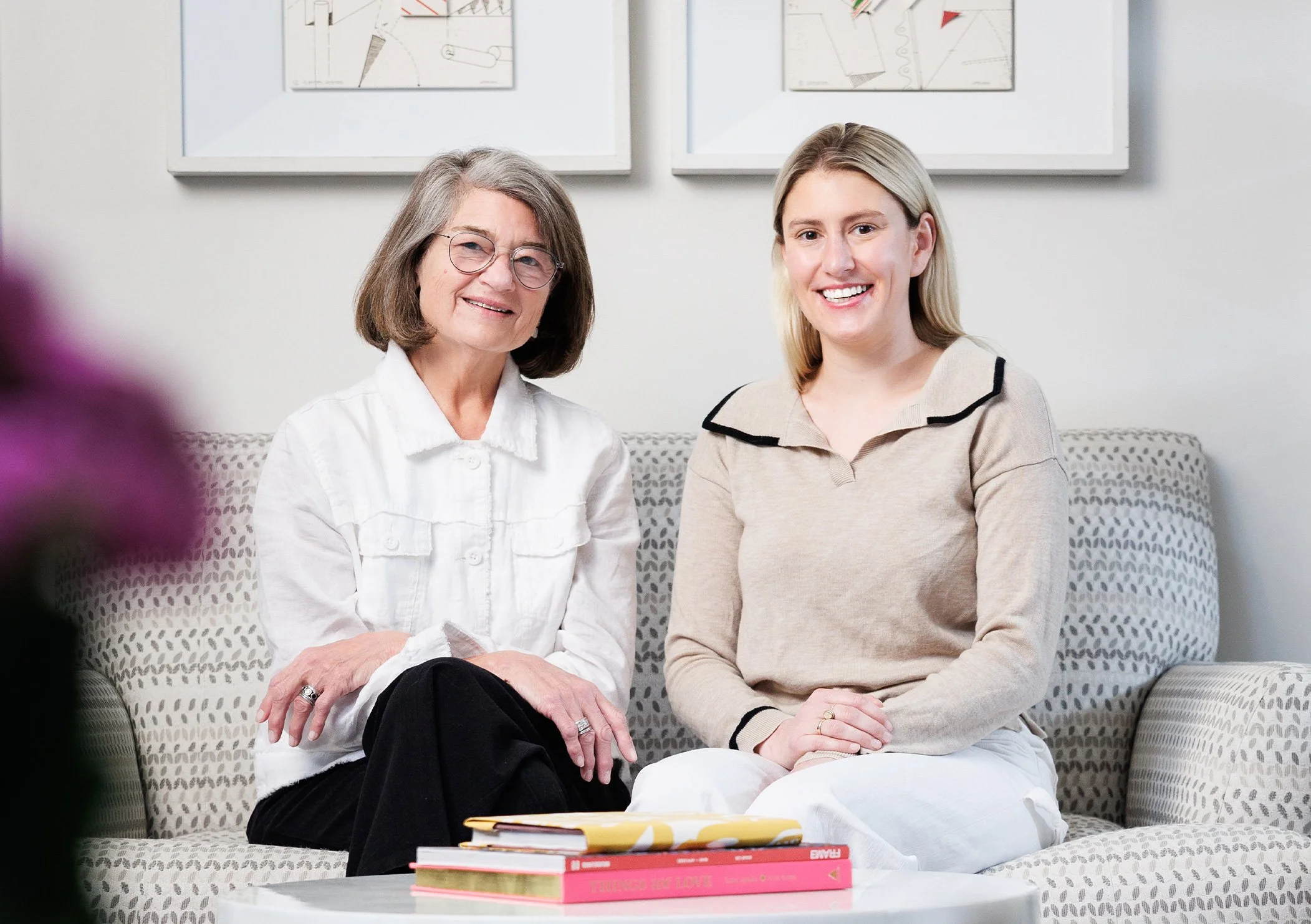
LUXURY USED TO BE LOUD ENOUGH THAT YOU COULD POINT TO IT. It was the chandelier, the formal dining room, the piece of furniture nobody was supposed to sit on, the room that looked beautiful in photographs but made everyone a little nervous in real life. It was impressive, sometimes even beautiful, but it often belonged more to the idea of a home than to the people living in it.
Alice Williams and Morgan Metcalf of Williams Metcalf Interiors are seeing something different take hold in Utah homes.
Clients are still investing. They still care about quality, beauty and detail. But the conversation has shifted away from display and toward something quieter, warmer and more personal.
“I think luxury has gone away like the Baccarat crystal,” Williams said. “I think it’s more about comfort and lifestyle than it is about bling.”
Metcalf sees the same thing. People are no longer choosing the most expensive object simply because it announces itself as expensive. They are choosing what fits the way they cook, sleep, gather, host, work and move through a day.
For one person, that may mean spending more on a kitchen because cooking is how the house comes alive. For another, it may mean investing in a bed because sleep is not an afterthought. For someone else, it may be the sofa that can survive children, dogs, guests, movie nights and everything else real life throws at it.
“I think luxury is more of a feeling,” Williams said, “than it is a thing.”
That may be the cleanest way to understand what is changing. The previous conversation around good design often begins with function, and rightly so. A home should work. It should make daily life easier instead of creating small frustrations in every room. But this next conversation goes a step further. Once a home works, what should it value?
In Utah, that question has become especially interesting because the state itself has become part of the design story. People are moving here, building here, remodeling here and choosing to stay here because it is such a good place to live. Williams and Metcalf understand that pull. Both are originally from New England, and their firm still has roots there, but Utah has become central to the work.
Why do they stay in Utah themselves, rather than move and grow more?
“The lifestyle,” Williams said. “The work here is just really exciting for us, because the houses are so great, and the light is so fabulous. Just working in light is a pleasure.”
Metcalf added that many clients are simply excited to be here. They are excited about the land, the seasons, the mountains, the way a house can open itself to a view or a yard or a gathering that begins in the kitchen and ends outside.
Formal entertaining has not disappeared, but it has softened in the design world. The separate dining room, the formal sitting room, the room reserved for guests and rarely used by the family, all feel less central than they once did. After years of spending more time at home, people seem less interested in performing hospitality and more interested in actually living it.
“I think people are entertaining at home,” Williams said. “There isn’t so much drive for the fancy dinner party.”
Instead, gathering spaces are being folded into the daily life of the house, which of course is a design shift, but it is also a cultural one. The best room in the house is no longer saved for company. The people who live there get to enjoy it, too.
Of course, that sounds simple until Pinterest gets involved.
Clients often arrive with saved images and a strong sense of what they think they want. Williams and Metcalf welcome that because inspiration boards can reveal useful information: color, mood, texture, proportion, a general feeling someone is trying to chase. But online images can also lie, or at least leave out everything inconvenient.
“The scale is always wrong,” Metcalf said.
A bathroom with soaring ceilings and perfect natural light may not translate to the room a client actually has. A chandelier that looks effortless online may belong in a house twice the size. Glass-front cabinets may photograph beautifully and become a daily source of annoyance for a family that does not live with everything lined up by color and height.
Sometimes, Williams said, people are not only showing a designer what they like. They are showing an imagined life.
“And sometimes in those Pinterest boards, they project a life that they don’t actually live,” she said.
That may be one of the quietest services a good designer provides: telling the truth without killing the dream.
Williams and Metcalf are not interested in simply appeasing a client. They are interested in collaboration, which means asking people to loosen their grip on the first idea long enough for the better one to appear.
“We won’t just appease the client,” Metcalf said. “Our jobs are to show the client all the options and say why their original idea might not be right.”
A recent Deer Valley project showed what that looks like in practice. The clients first thought the home needed a refresh: redo the kitchen, update the bathrooms and clean up some heavier architectural elements. Williams and Metcalf saw a bigger opportunity.
What began as a surface-level update became a deeper rethinking of how the home worked, especially the relationship between public and private spaces when guests were there. The redesign changed more than the look of the condo. It changed how the clients lived in it.
“At the end of the day, it looks like them, and we were never there,” Williams said. “It functions like them, it looks like them, it feels like them.”
In a world of fast furniture and disposable interiors, Williams and Metcalf are looking in the other direction. They seek out local workrooms, furniture makers, cabinet makers, carpenters, drapery specialists, installers and tradespeople who still care about the finished product.
“We strive very hard to find those quality products that they’ll have for the rest of their lives,” Williams said, “and they won’t end up in the landfill.”
Quality, though, is not only about the object. It is about the people behind it. Their clients may meet the craftsman who built their dining table. They may know the piece came from someone nearby. They may understand that a room did not arrive in a box, but through a network of hands, decisions and relationships.
“They have a story to tell,” Metcalf said.
That story includes Salt Lake workrooms, Park City drapery companies, cabinet makers, carpenters, tile installers, plumbers, electricians, wallpaper installers and carpet installers. Many of those people are invisible when a project is photographed, but the whole room depends on them.
“Our work is only as good as their work on our job,” Williams said.