
YESCO
Signage
By Taylor Hartman | Photo by Dung Hoang
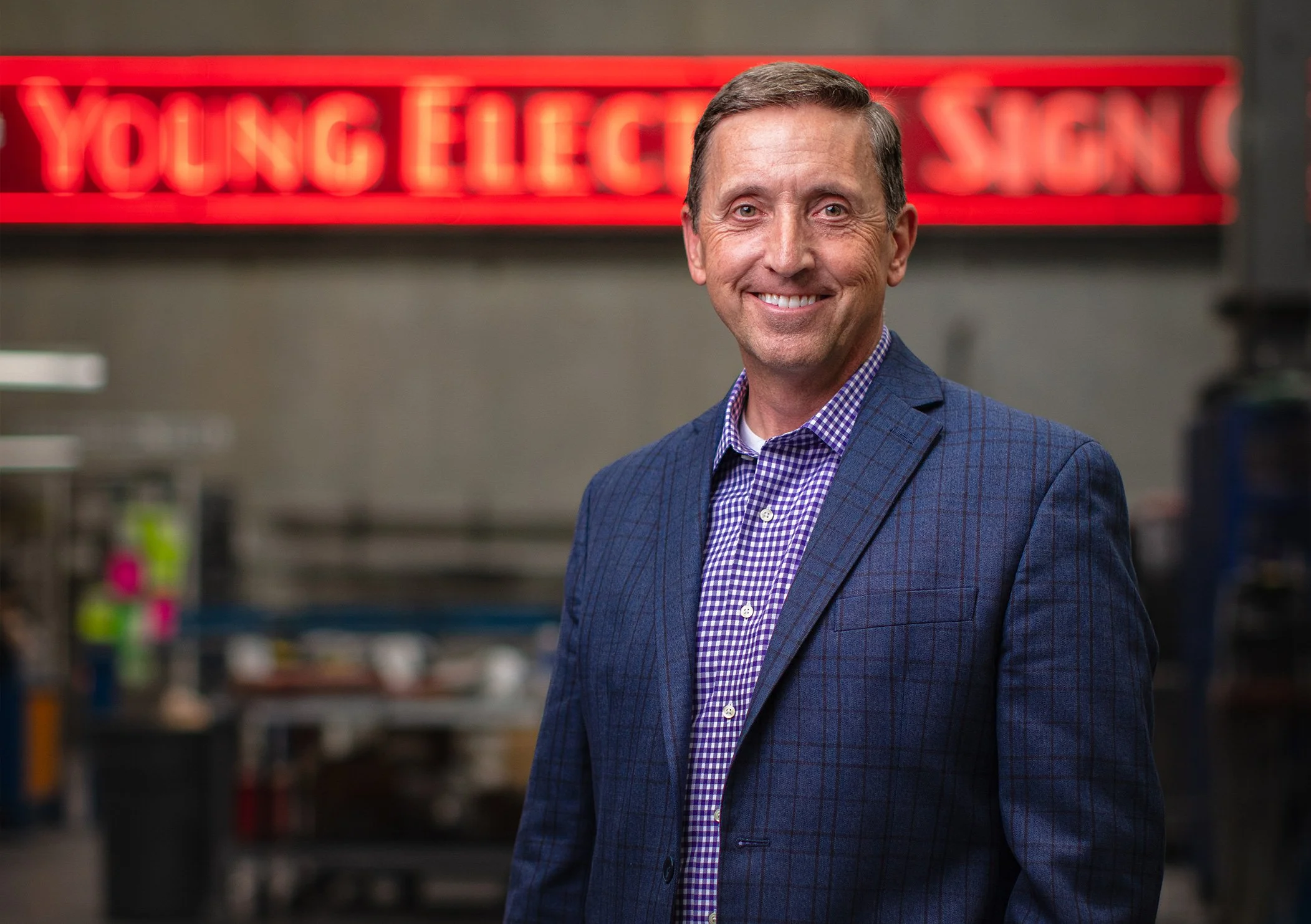
MOST PEOPLE DO NOT THINK ABOUT EVERYDAY SIGNS BECAUSE THEY MERGE SEAMLESSLY WITH OUR WORLD.
We follow them through airports, spot them from the interstate, use them to find the right gate, the right exit, the right business, the right city. They become part of the background of daily life so completely that their importance can be easy to miss. But for Jeff Young, the third generation of his family to serve YESCO, currently as senior vice president, that hidden-in-plain-sight quality is part of what makes the work matter.
At Salt Lake City International Airport, for example, YESCO’s work is not represented by one sign or even one marquee installation. It is represented by thousands of moments of direction and recognition.
“We’re well past 5,000 signs at the airport, helping people from all over the world find their way,” Young said.
Not all signage is splashy. Most signs are the kind that are visible, practical, and well designed; easy to understand. But there is more to YESCO and its’ story than just way finding.
YESCO’s story began in Ogden in 1920, when Thomas Young, who had come to Utah from England as a teenager, founded what was then the Thomas Young Sign Company. Long before the company became associated with neon, LEDs, digital displays, and some of the West’s most recognizable landmarks, its earliest work was rooted in the craft of sign painting, with hand-lettered advertisements, gold-leaf window signs, wall signs and the practical art of helping businesses be seen.
From that small Ogden beginning, Young built a company around the same idea that still drives YESCO today: a sign is not only a marker, but a way for a business, a city or a place to announce itself to the world.
Young describes his grandfather as someone who understood more than paint, neon or fabrication. He understood momentum. When Thomas Young looked at places like Las Vegas in the 1930s, he saw electricity, rail lines, Hoover Dam, and growth.
“He saw the vision of a community that was growing,” Young said. "And they had a lot of electricity"
From Ogden, the company expanded into Vegas and the West, working with businesses, cities, banks, casinos, airports, arenas and brands that needed to be seen. In Las Vegas, Young said, it is difficult to think of a historic sign YESCO did not have some connection to. In Utah, the company’s work stretches from airports and city markers to Maverik stores, Wheeler Machinery, the Delta Center, the University of Utah, and Olympic projects.
Young is part of the third generation of family leadership at YESCO. His career began in 1980, and over the years he has held roles that included leadership of YESCO Salt Lake and oversight of major projects, including work tied to the 2002 Olympic Winter Games.
Young described a replica of the first truck his grandfather bought; a 1924 Model T. He also described an old sign built for the Ogden office in the late 1920s, a sign that spent years in Ogden, later moved to Las Vegas, and eventually returned to Utah.
“Not only is the metal the same, but there’s still many of the neon pieces that are still lighting up since the 1920s,” Young said.
The detail says a lot about YESCO. This is a company that has moved from painted signs and neon to LEDs, digital displays and large-scale installations, but the older craft has not disappeared. It still has a place inside the company because so many signs still depend on it.
Young explained that neon was often exposed in the early days, then later hidden inside sign elements after plastics made it possible to illuminate letters and shapes from within. Many of the signs people pass every day still have neon inside them, which means they still need to be maintained, repaired, and at times, recreated by hand.
YESCO keeps old patterns. It maintains the ability to bend replacement tubes. It continues to care for signs long after they are installed. That continuity, Young said, is not only about nostalgia. It is about service, responsibility and skill.
“The craftsmanship is ever so important, and it takes years to become a good neon tube bender,” Young said.
For business owners, Young explained, the sign can become the moment when years of planning, investment and risk finally feel real. Customers may spend millions building a beautiful facility, but when the sign goes up, something changes.
“This is now ours, it’s our signature, it’s our brand,” Young said.
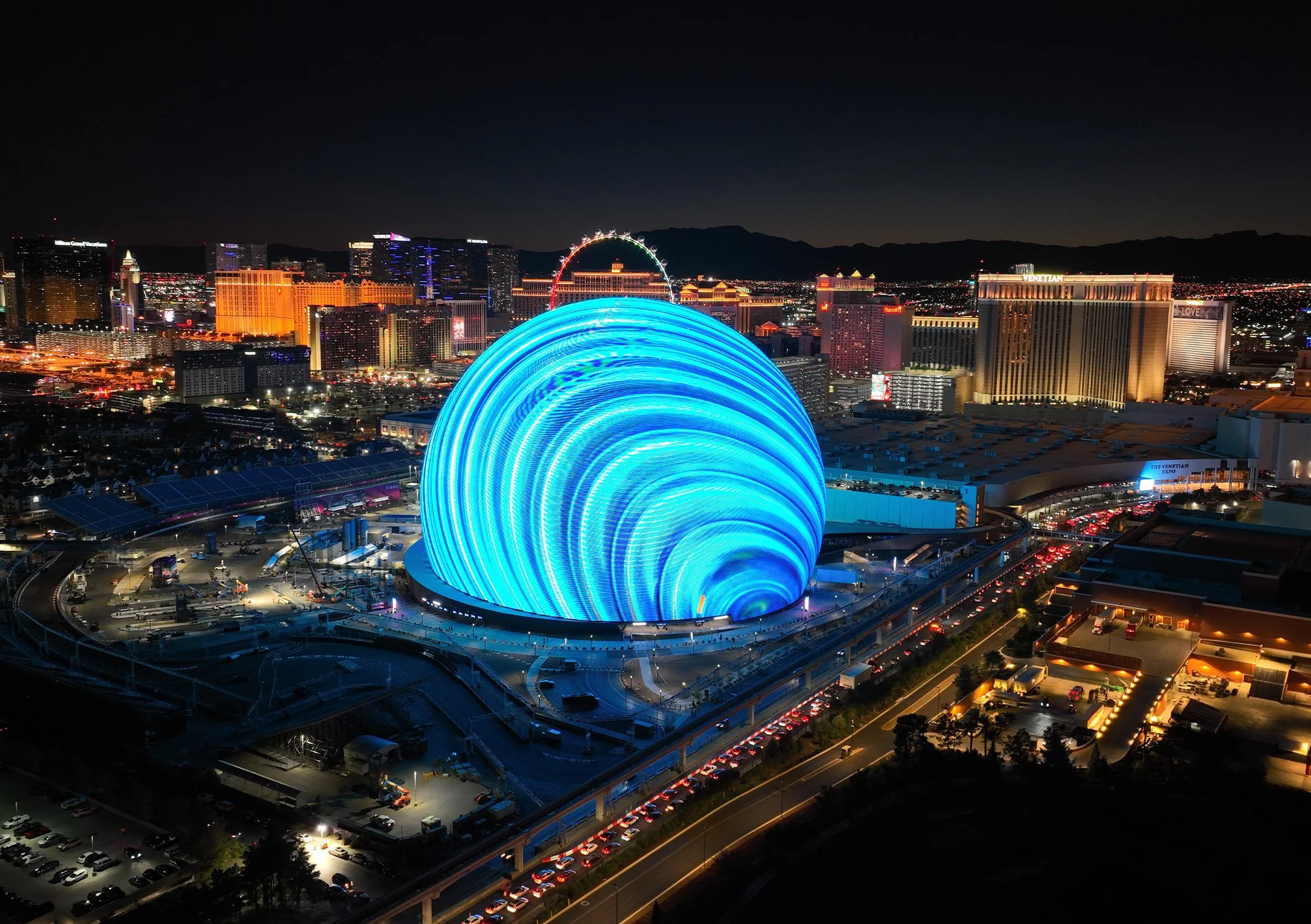
Sometimes, over time, an iconic advertisement becomes part of the city itself, like the famous Vegas Vic cowboy sign that YESCO erected in 1951. The company was also an integral partner in the exterior display of the Sphere, helping bring one of the world’s most recognizable new visual landmarks to life.
Young spoke with pride about YESCO’s work tied to the Delta Center, the University of Utah and the Olympics. In 2002, he and a colleague turned on the switch that lit the Olympic rings on the mountain — a moment seen by an enormous audience and tied forever to Utah’s Olympic history.
Today, Young does not see signs as old-fashioned or fading. He sees a field still changing through LEDs, digital communication, creative design, experiential technology, and deeper collaboration with customers, architects and designers. The tools are different from the ones Thomas Young used in Ogden, but the purpose remains surprisingly consistent.
YESCO builds signs. It maintains them. It helps businesses, cities and public places become visible and memorable.
As Young put it, “We're the creators and the caretakers.”
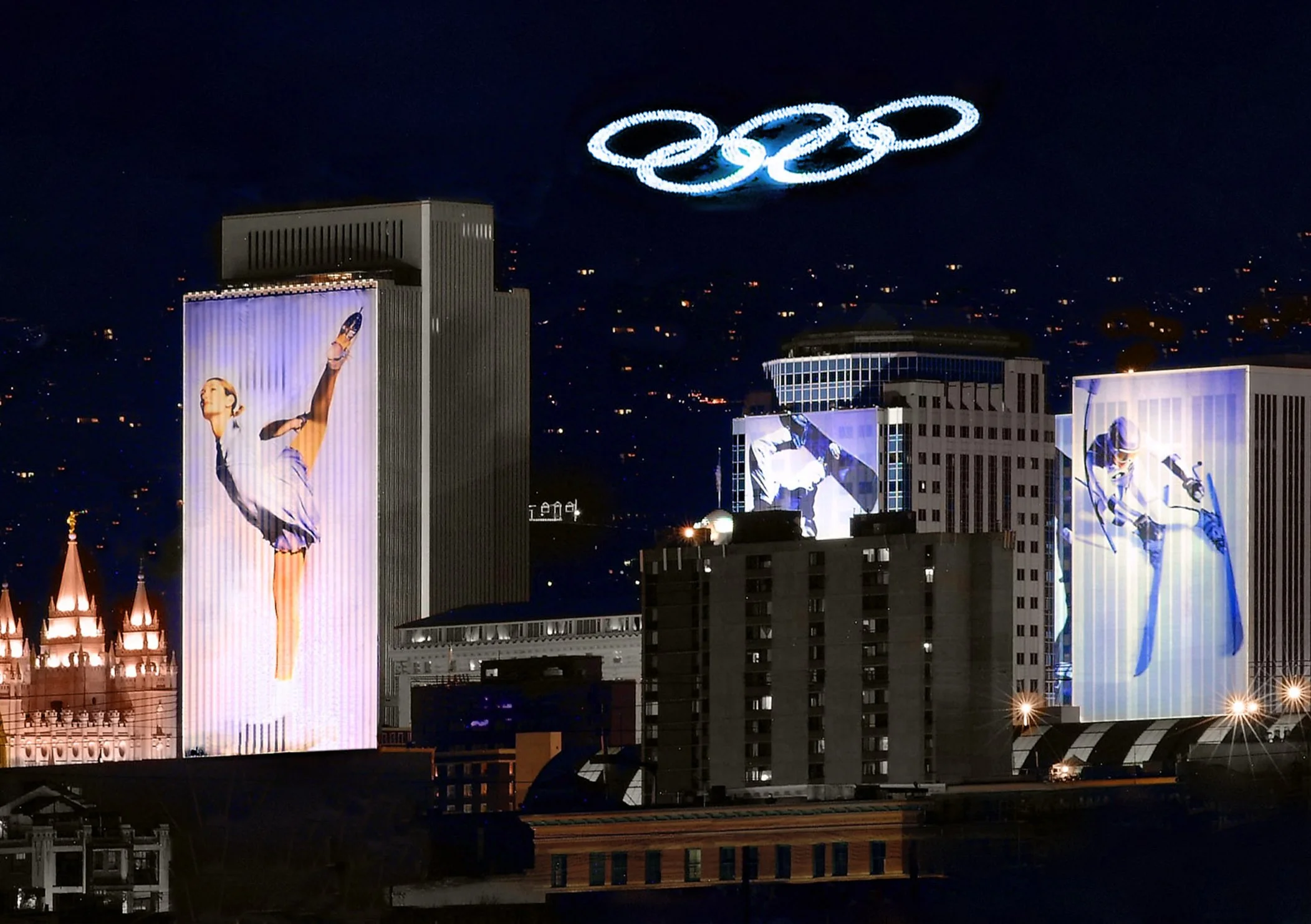
Young spoke with pride about YESCO’s work tied to the Delta Center, the University of Utah and the Olympics. In 2002, he and a colleague turned on the switch that lit the Olympic rings on the mountain — a moment seen by an enormous audience and tied forever to Utah’s Olympic history.
Today, Young does not see signs as old-fashioned or fading. He sees a field still changing through LEDs, digital communication, creative design, experiential technology, and deeper collaboration with customers, architects and designers. The tools are different from the ones Thomas Young used in Ogden, but the purpose remains surprisingly consistent.
YESCO builds signs. It maintains them. It helps businesses, cities and public places become visible and memorable.
As Young put it, “We're the creators and the caretakers.”